

Eco-Friendly Roofing Trends in Pune: Solar + Cool Roofs
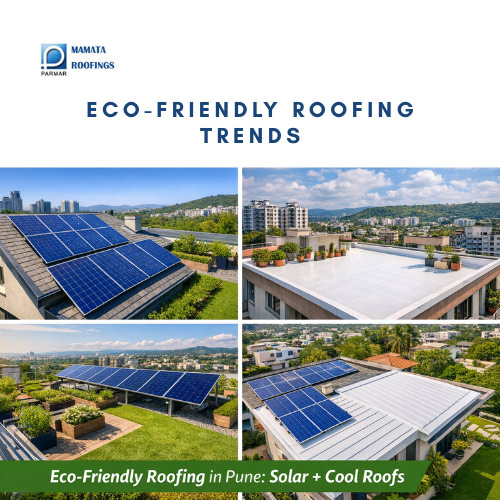
Pune is entering a new phase of building design. Rooftops that once existed mainly to keep rain and sunlight out are increasingly being treated as active parts of a building's energy strategy. For homeowners, housing societies, commercial properties and industrial buildings, the conversation is moving toward two practical ideas: generating electricity from the roof and reducing how much heat the roof absorbs in the first place.
Pune's climate makes that conversation particularly relevant. The city experiences hot pre-monsoon months, a strong monsoon period and a wide seasonal range. Long-term climate records show substantial rainfall during the June-to-September period, while summer maximum temperatures can move into the high 30s and occasionally above 40°C. That combination makes both heat management and rain-ready construction important considerations for a modern roof.
The most useful way to think about solar roofing and cool roofs is not as competing technologies. They solve different problems. Solar panels convert sunlight into electricity, while a cool roof is designed to reflect more solar radiation and release absorbed heat efficiently. When the roof structure, insulation, drainage, ventilation and solar installation are planned together, the result can be a more efficient and comfortable building rather than simply a roof carrying extra equipment.
That is the central idea behind the latest eco-friendly roofing trends in Pune: use the roof more intelligently, reduce avoidable heat gain, generate clean electricity where practical, and build for the local weather rather than treating sustainability as an afterthought.
Why Eco-Friendly Roofing Is Becoming More Relevant in Pune
Energy use inside a building is influenced by many factors-orientation, windows, insulation, equipment, occupancy and air-conditioning. The roof is another important part of that equation, particularly for top-floor rooms, lightweight structures and large industrial spaces. A roof exposed to intense sun can transfer heat inward, increasing the cooling burden during hot periods.
At the same time, the roof offers one of the most convenient surfaces for photovoltaic generation because it is elevated, open to sunlight and already part of the building envelope. Research on rooftop photovoltaic systems in Indian climates has also identified a useful secondary effect: panels can shade the roof beneath them, reducing roof and ceiling temperatures in suitable conditions. The exact benefit depends on the building, panel layout, roof construction and season, so it should be treated as a design consideration rather than a guaranteed saving.
For a broader overview of material choices and roofing applications across the state, see our roofing guides for Maharashtra before deciding on a roof assembly.
What Exactly Is a Cool Roof?
A cool roof is a roof surface designed to reflect a larger share of incoming solar radiation and emit absorbed heat effectively. The concept is broader than simply painting a roof white. Cool-roof performance can involve reflective coatings, high-reflectance finishes, suitable colours, tiles, metal surfaces and other roof-surface treatments.
The important point is that a cool roof addresses the outer surface of the building. It does not replace insulation. A roof can have a reflective finish and still benefit from a properly designed insulated assembly underneath. In other words, reflectance and insulation work at different stages of the heat-transfer process.
How a Cool Roof Can Improve Comfort
- Reflects more of the sun's energy instead of absorbing it.
- Can reduce roof-surface temperatures during strong solar exposure.
- Can reduce heat entering the occupied space when combined with an appropriate roof assembly.
- May reduce the cooling demand of air-conditioned spaces, depending on building design and operating conditions.
- Can improve comfort in naturally ventilated or lightly conditioned spaces.
Indian building-energy guidance treats cool-roof measures as an additional strategy rather than a substitute for meeting the thermal performance requirements of the roof assembly. That distinction matters when planning a new Pune home or commercial building.
Solar Roofing in Pune: More Than Just Panels on a Roof
Rooftop solar is one of the most visible sustainable roofing trends in Pune. But a successful solar installation starts with the roof, not the panel. The roof needs adequate structural capacity, a suitable slope, reliable waterproofing and enough unobstructed area to make the installation worthwhile.
Key Factors Before Installing Rooftop Solar
- Roof condition: An old or deteriorating roof should be assessed before panels are installed.
- Structural capacity: The roof and supporting members should be checked for the proposed system and local wind conditions.
- Solar access: Nearby buildings, trees, water tanks and other structures can create shade.
- Orientation and layout: Panel placement should be designed around the available roof geometry rather than forcing a standard layout.
- Waterproofing: Mounting details should not create new leakage paths.
- Maintenance access: There should be safe access for cleaning, inspection and future repair.
- Electrical planning: Cabling, inverter placement, earthing and protection systems need to be coordinated with the building.
Solar Panels and the Roof: A Useful Partnership
Solar panels and roofing can complement each other when planned as one system. The panels intercept sunlight before it reaches much of the roof surface, while the roof continues to provide weather protection and structural support. For a building owner, this creates two potential benefits from the same roof area: electricity generation and partial shading.
The relationship is especially interesting for larger roofs such as factories, warehouses, institutional buildings and spacious residential properties. However, the roof should not be filled simply because space is available. A good design leaves practical access routes, respects drainage and avoids creating difficult-to-maintain corners.
If you are evaluating materials that can support modern roofing requirements, our roofing sheet manufacturers in Maharashtra page can be used as a starting point for exploring roofing options.
Combining Solar Panels with a Cool Roof
One of the more interesting eco-friendly roofing approaches is to combine photovoltaic panels with a reflective roof surface. The two measures operate differently but can support the same objective: reducing the building's dependence on conventional energy while managing heat more effectively.
Why the Combination Makes Sense
- Solar panels generate electricity from sunlight.
- A reflective roof can reduce solar heat absorption on exposed roof areas.
- Shaded portions beneath elevated panels may experience less direct solar exposure.
- Insulation can further slow heat transfer into occupied spaces.
- Good ventilation can help remove accumulated hot air in suitable roof designs.
The exact energy and comfort outcome varies considerably. Roof material, panel spacing, air gap, insulation, building use, weather, air-conditioning operation and maintenance all influence performance. A responsible design therefore avoids one-size-fits-all claims.
Cool Roofing Materials and Finishes to Consider
The phrase 'cool roof' describes performance characteristics rather than one universal product. In Pune, the appropriate choice depends on whether the building uses metal sheets, insulated panels, concrete construction, tiles or another roof system.
- Reflective Metal Roofing
Modern coated metal roofing can be selected with finishes that reflect more solar radiation. For industrial and commercial buildings, the roof profile, coating, insulation and ventilation strategy should be considered together. - Insulated Roofing Panels
Insulated panels add a thermal barrier within the roof assembly. They can be useful where indoor temperature control is important, including offices, production areas, warehouses and premium residential spaces. - Reflective Coatings on Suitable Roofs
Reflective roof coatings can be considered for compatible existing surfaces. Before application, the substrate needs to be clean, sound and suitable for the coating system. A coating should not be used to disguise a roof that already has unresolved leakage or structural problems. - Polycarbonate in Daylighting Areas
Polycarbonate roofing can be useful where daylight is a priority, such as covered walkways, skylight sections, verandas and selected industrial applications. It should be used selectively because daylight transmission and solar heat gain need to be balanced.
For projects where controlled daylight is part of the design, explore polycarbonate roofing sheets as one possible roofing component.
The Role of Insulation and Ventilation
It is easy to focus on visible technologies such as solar panels and reflective finishes, but less visible design decisions can make a major difference. Insulation slows heat transfer. Ventilation helps remove hot air from spaces where it accumulates. Together, they can make the roof more effective.
Roof Ventilation
In appropriate building types, ridge ventilation, roof ventilators or carefully designed openings can help release accumulated warm air. The system needs to be coordinated with rain protection, insect control, roof geometry and the building's use. Ventilation is not a universal substitute for insulation or air-conditioning; it is one component of a broader passive-design strategy.
Rainwater Management Is Part of Sustainable Roofing
A roof is only sustainable if it remains reliable. Pune's monsoon makes drainage and waterproofing particularly important. Gutters, downpipes, flashings, valleys, overlaps and penetrations should be planned before installation rather than added as an afterthought.
- Keep drainage paths clear of leaves and debris.
- Check joints, flashings and fasteners before the monsoon.
- Design gutters and downpipes for the roof area and expected rainfall.
- Keep solar mounting points and cable entries properly sealed.
- Avoid unnecessary penetrations through the waterproofing layer.
Can an Existing Roof Be Upgraded Sustainably?
Yes, and this can be a practical route for many Pune properties. A complete roof replacement is not always necessary. Depending on the condition of the roof, upgrades may include a reflective coating, additional insulation, improved ventilation, drainage improvements or a carefully designed solar installation.
The sequence matters. First identify leaks, corrosion, weak members, damaged fasteners or other defects. Then determine what the roof can safely support. Installing solar panels on a roof that already needs major repairs can make future maintenance more difficult and expensive.
Where These Trends Make the Most Sense
| Building type | Useful strategy | Main objective |
|---|---|---|
| Independent homes | Cool roof + rooftop solar | Comfort and electricity generation |
| Housing/common areas | Reflective roof + solar where feasible | Shared energy and heat management |
| Factories | Insulated roof + solar + ventilation | Energy efficiency and worker comfort |
| Warehouses | Reflective/insulated roof + solar | Heat control and roof utilisation |
| Farmhouses | Reflective roof + insulation + selective solar | Low-maintenance comfort |
| Commercial buildings | Cool roof + solar-ready design | Operating-cost and sustainability goals |
Common Mistakes to Avoid
- Treating solar panels as a replacement for a sound roof.
- Choosing a reflective finish without considering the complete roof assembly.
- Adding panels without checking structural capacity and waterproofing details.
- Covering the entire roof with equipment and leaving no maintenance access.
- Assuming a single product will deliver the same performance on every building.
- Neglecting drainage because the roof is described as 'low maintenance'.
- Making a decision only on upfront price instead of considering the roof's full service life.
A Practical Eco-Friendly Roofing Checklist for Pune
- Assess the roof structure and current condition.
- Map the usable solar area and identify shading.
- Choose the roof finish with solar reflectance and durability in mind.
- Specify insulation according to the building's use and climate needs.
- Plan ventilation where it is appropriate for the structure.
- Design drainage before finalising panel and sheet layouts.
- Use compatible fasteners, sealants and flashing details.
- Keep inspection and maintenance access available.
- Coordinate roofing and solar work rather than treating them as unrelated contracts.
- Review the whole-life cost, not just the initial quotation.
A Smarter Way to Think About Sustainable Roofing
Eco-friendly roofing does not have to mean choosing the newest-looking product. In many cases, the most sustainable roof is the one that performs reliably for a long time, needs fewer replacements, manages heat sensibly and uses its available surface productively.
For Pune, that can mean a combination of straightforward measures: a durable roof assembly, appropriate insulation, a reflective outer surface, effective drainage, sensible ventilation and rooftop solar where the building and energy requirements justify it.
The most important decision is therefore not whether to choose solar or a cool roof. It is whether the entire roof has been designed as a coordinated system. When these elements are considered together, sustainability becomes a practical building decision rather than a decorative feature.
For project-specific material selection, roof condition assessment and installation planning, you can consult roofing specialists in Maharashtra and discuss the roof's structural, weather and usage requirements before finalising specifications.
Final Takeaway
The future of roofing in Pune is moving beyond simple weather protection. Solar generation, reflective roof surfaces, insulation, ventilation and better rainwater management are becoming part of a more integrated approach to building performance.
Rooftop solar can turn unused roof area into an electricity-generating asset. Cool-roof measures can reduce solar heat absorption. Insulation can slow heat transfer, while ventilation and good drainage can improve the roof's overall performance. None of these should be treated as a magic solution on its own.
For homeowners, businesses and industrial property owners, the practical goal is simple: build or upgrade a roof that stays reliable in Pune's weather, supports comfortable interiors and uses energy more intelligently. That is what makes an eco-friendly roof genuinely useful over the long term.
FAQs
Q1. What is a cool roof and how does it work?
A1: A cool roof uses a surface designed to reflect more solar radiation and release absorbed heat efficiently. It can reduce roof-surface heating and may lower heat entering the building when combined with suitable insulation and roof construction.
Q2. Can solar panels and cool roofs be installed together?
A2: Yes. Solar panels and cool-roof measures address different parts of building performance and can be planned together. The roof should be checked for structural capacity, drainage, waterproofing, maintenance access and suitable solar exposure before installation.
Q3. Is rooftop solar suitable for every building in Pune?
A3: Not necessarily. Suitability depends on roof condition, structural capacity, available sunlight, shading, electrical requirements, roof geometry and project economics. A site-specific assessment is preferable before installation.